
Steam is undeniably the champion of PC gaming, boasting millions of daily users and a massive collection of games. Under the hood, every user account is characterized uniquely by a Steam ID. This ID comes in various formats depending on the context and use case. One cannot fix server problems, enter a friend's game, or use third-party applications without knowing what Steam IDs are.
Here, we will outline the major Steam ID formats, describe their characteristics, and provide practical examples of use cases for each type.
What is a Steam ID?
A Steam ID is a non-changeable numeric account identifier on Steam, assigned to every Steam account. The account names may be variable, but Steam IDs are permanent; thus, they serve as the most reliable reference point. Developers, server administrators, and players use these IDs to carry out tasks such as issuing bans, authorizing account rights, and enhancing the multiplayer gaming experience.
Types of Steam IDs and Their Formats
Despite that, Steam IDs can take several forms. Over time, developers have created various Steam ID formats for technical reasons. Let them be elaborated.
1. Steam HEX
Format Example: 11000010005c832
Steam HEX is essentially the hexadecimal representation of a SteamID64. Many servers, particularly in the FiveM (GTA V roleplay) community, rely on HEX IDs for whitelisting, banning, and permissions management.
Mainly, the reason for this is that scripts and plugins have fewer errors in production when they interact with HEX ID than with 64-bit integers. So, if you had to whitelist a player on a FiveM server, you were likely asked for the Steam HEX, not the Steam ID64.
Use-case:
Necessary for the FiveM servers and other similar custom multiplayer environments
The work of the automated tools is going without a hitch with the script
The modded games community in the gaming industry can readily assimilate it
2. SteamID
One example of the format: STEAM_0:1:123456
In short, this is the base model for the formats used in the ancient days of gaming (Counter-Strike 1.6 and other early Source engine games), and it consists of three components:
The first component is the prefix STEAM_0
The second component is the authentication server number (0 or 1)
The last one is the account number
Use case: It is still used in some legacy systems, mods, and server administration tools that have not been updated.
3. SteamID64
Format Example: 76561197960287930
SteamID64 is a 64-bit number that represents an account numerically and is the most common format. Every account has its own, and this is the basic one when it comes to Valve's Web API.
Use case:
Automated profile data retrieval
Different methods for account linking
Organizing data in multiplayer games
4. Steam Community ID (Profile URL)
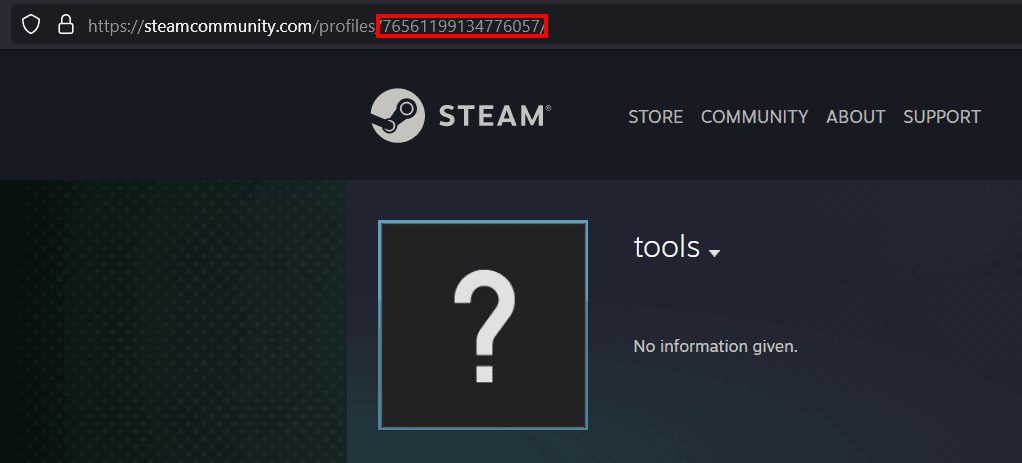
Format Example: https://steamcommunity.com/profiles/76561197960287930
The Steam Community ID is more user-friendly and convenient because players can easily share profile links without needing to provide numeric IDs; they simply need to copy the URL and send it to other people.
Use case:
Friends account visiting
Publication of the profiles link in forums and the community
Easy Find
5. Custom URL (Vanity URL)
Format Example: https://steamcommunity.com/id/YourNameHere
The user's Steam Community ID is a unique number, but it can be changed to a custom string, known as a vanity URL. Actually, it is not a unique identifier (due to the possibility of changing the URLs of several accounts over time). Still, it makes sharing the user profile more personal and convenient.
Use-case:
Streamers and content creators
Making Profile links with easy memorizing
Adding steam account sharing makes it more professional when public
How to Find Your Steam ID
Several methods are available to find your Steam ID depending on the format.
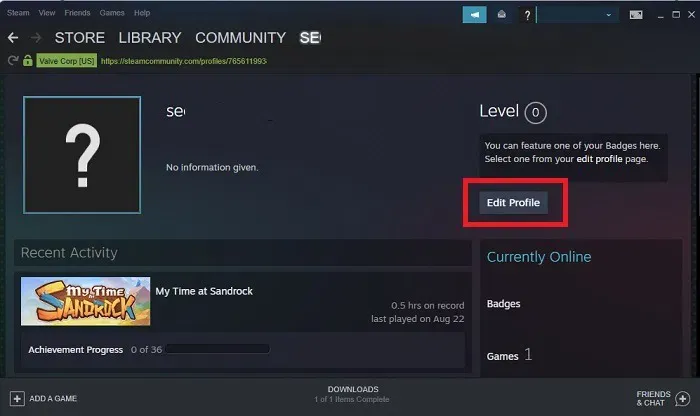
Through Steam Client: Open your profile → right-click → Copy Page URL → extract the numeric ID from there.
Console: Developer consoles in games typically reveal your Steam ID when you enter the command 'status'.
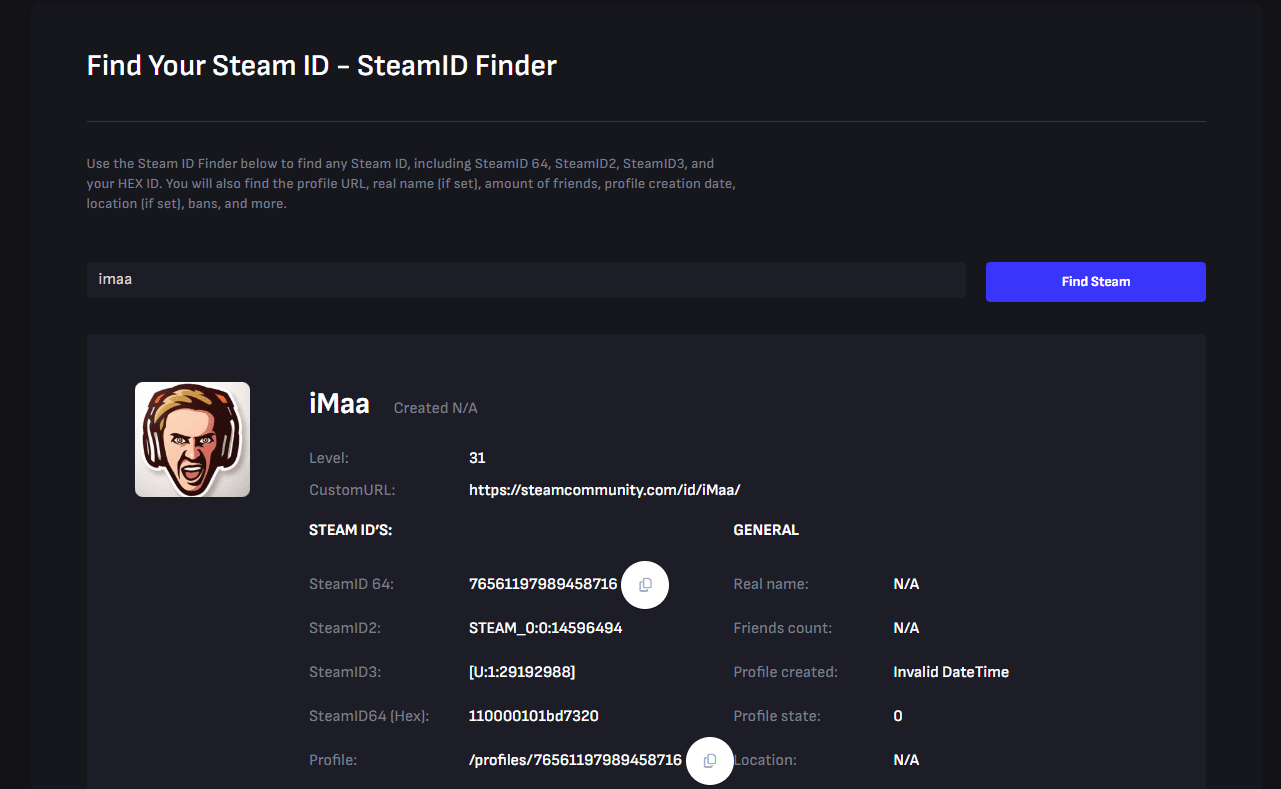
Third-Party Utilities: Apart from SteamID.io, numerous other websites are available to assist you by providing a profile URL in various formats, including SteamID, SteamID64, and Steam HEX, within a short time.
Why Multiple Formats Exist
The reason why Steam IDs are available in different formats is a matter of compatibility, technical limitations, and user convenience.
Retainment: SteamID (legacy) is still maintained for the most part, only in ancient games that have not been updated.
Unboundedness: SteamID64 was designed to accommodate the ever-increasing number of users, ensuring that no two accounts share the same ID.
Flawless Typing: Hex successfully attracted the attention of the community because some modding frameworks found it much easier to adapt by integrating it.
Intuitive Concepts: The user experience of Community IDs is akin to Vanity URLs, which are specifically designed to help new Steam users become more comfortable with the platform.
Practical Use-Cases by Role
To make this concept clear, here is an explanation of different formats and typical users:
Developers: SteamID64 to link with APIs and for synchronization of data
Server Admins: HEX IDs for whitelist and ban activities (e.g., FiveM)
Players: Community IDs or Vanity URLs to make it easier for other people to find our accounts
Modders: SteamID (legacy) does not cause any compatibility issues with older plugins
Final Thoughts
At first, Steam IDs can appear perplexing, yet they are used to identify users in various situations. For instance, if you are a developer who wants to use the Steam API, an administrator of FiveM who needs a Steam HEX, or just a player who wants to let your friends have a look at your profile, in any case, if you are aware of the different types of IDs, it will help you not to get mixed up and it will save your time.
As these different formats are part of Steam's ongoing development, they are also used to ensure that the service is both compatible with older versions and usable with newer ones, thereby accommodating players, modders, and professional developers.